Brilliant But Doomed: Technology’s Most Magnificent Failures
The short lives and sad fates of twenty genuinely bright ideas.By Harry McCracken | Monday, July 27, 2009 at 5:59 am

Life, as John F. Kennedy once helpfully pointed out, isn’t fair. Neither is the market for technology products. There’s no law that says that the best products win: The history of tech is pockmarked with breakthrough hardware, software, and services that were dismal failures in the marketplace. (It’s also rife with mediocre products that became massive bestsellers–insert your own example here.)
Of course, not every innovative tech product deserves to be a hit. Some flop because they’re ahead of their time, which is kind of admirable; others bomb because they take too long to emerge from the lab and are obsolete by the time they do, which is simply embarrassing. And some products that are enticing on paper turn out to have fatal cases of Achilles’ heel in the real world. But they’re all valuable case studies in how good intentions can go awry.
For this article, I intentionally skipped some of the most legendary magnificent failures, such as the Apple Newton, Commodore Amiga, and Sony Betamax–they’ve been celebrated more or less continuously since their untimely passings, and I wanted to devote more space to lesser-known contenders. I figure you’re going to reminisce about your own favorites in the comments anyhow.
Thanks to my pals on Twitter (where I’m @harrymccracken) for nominating scads of products for this story. And yes, the title of this article is a homage to Brilliant But Cancelled, a retrospective of short-lived TV shows that appeared on the Trio cable channel…a channel which was itself both excellent and unsuccessful.
1. Difference Engine No. 2 (1847-1849)
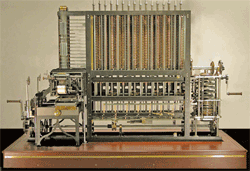 What it was: English mathematician Charles Babbage’s design for a five-ton machine with 8,000 mechanical parts that would calculate and tabulate polynomial functions–an improved version of his earlier Difference Engine No. 1, incorporating ideas from his more general-purpose Analytical Engine.
Why it was brilliant: Babbage was inventing computers a hundred years before the industry really got off the ground. It took a century and a half before anyone was able to to build his Difference Engine No. 2., but once two were assembled by London’s Science Museum–with minor modifications to Babbage’s plans–they worked as intended. Anyone wanna argue that’s not evidence of brilliance?
Why it was doomed: Babbage’s ability to conceive of extraordinarily ambitious machines outstripped his ability to construct them–which is less of a criticism of his ability to finish projects and more of a sign of just how ahead of his time he was. He received British government funding for his first Difference Engine, but ran out of cash without having ever built a working model, and also failed to build more than a few components of his Analytical Engine. By the time he designed the second Difference Engine he didn’t attempt to construct one.
Its legacy: Concepts originated by Charles Babbage are reflected in every computing device you own. And since he was never able to build any of his extraordinary brainchildren, he’s also the father of the technological magnificent failure.
Video sidelight: Here’s a demonstration of the modern Difference Engine at Silicon Valley’s Computer History Museum.
2. Polaroid Polavision (1977)
 What it was: Polaroid’s instant-photography movie system, the result of three decades of experimentation and research.
Why it was brilliant: Even Polaroid’s still-image instant cameras, such as the amazing SX-70, remain among the most impressive feats of consumer-electronics wizardry ever. Polavision made instant movies by capturing an amazing eighteen instant photos a second, courtesy of a handheld camera that used handy film cartridges.
Why it was doomed: Many brilliant tech products have failed because they were ahead of their time; Polavision flopped big-time because it was simply too late. It was pricey ($675) and the movies it created were short (two minutes and forty seconds) and silent, and could only be watched on the bundled tabletop screen (they were too dim to be projected). None of this might have mattered if the system had been released in 1967–but in 1977, it was up against early consumer video cameras and VCRs. From the day it launched, Polavision looked shockingly retro, and its catostrophic failure eventually contributed to the sad exodus of legendary Polaroid founder Edwin Land.
Its legacy: Polavision may have been a disaster, and today’s Polaroid itself may be nothing more than a shell company that slaps its logo on other companies’ products. But the basic idea–instant movies–is as appealing today as it was in 1977. What’s a Flip camcorder other than what Polavision wanted to be but couldn’t?
Video sidelights: Even marketing starring Danny Kaye (and later Ed McMahon, who tried to reposition Polavision as a business product) couldn’t save Polavision.
3. QUBE (1977)
 What it was: The nation’s first interactive TV service, which Warner Communications launched in Columbus, Ohio on December 1st, 1977.
 Why it was brilliant: QUBE packed impressive technology, including a two-way 256-kbps data connection at a time when dial-modems ran at 300-bps (and almost nobody had them yet). Its oversized 18-button remote control let consumers interact with programming–which included new concepts such as pay per view, interactive polls, home shopping, and distance learning. The then-impressive thirty channels of programming included the children’s station Pinwheel (which was later renamed Nickelodeon) and an all-music station known as Sight on Sound (a precursor to MTV).
Why it was doomed: The system was pricey to build out–the boxes cost $200 apiece compared to $40 for a typical set-top box. And all that original, interactive programming made it expensive to operate. It also turned out that the interactive aspect of the service wasn’t particularly popular. Couch potatoes liked to remain couch potatoes. By 1984, Warner began to wind down QUBE operations, a process that took a decade.
Its legacy: In 1994, Warner (then known as Time Warner) tried again with the Full Service Network, a QUBE-like interactive service which launched in Orlando and flopped more quickly than QUBE had. Around the same time, the World Wide Web exploded, bringing consumers interactivity of the sort originally envisioned by QUBE, plus a whole lot more. As of 2010, cable TV remains surprisingly non-interactive, but hints of QUBE-like functionality (such as the use of TiVo boxes to order pizza) continue to crop up.
Video sidelights: A former QUBE producer has uploaded a bunch of fascinating video clips from QUBE’s launch day to YouTube, including a bit with the Krusty-like Flippo the clown discussing the QUBE remote with some kids and the wonderfully-named Columbus Goes Bananaz, a music show that hosted Wolfman Jack.
4. RCA SelectaVision (1981)
 What it was: RCA’s analog home movie system, which used a phonograph-like player with a needle to play back video from 12-inch vinyl discs stored in caddies.
Why it was brilliant: SelectaVision discs were essentially LPs you could see as well as hear–which in 1981 was still a cool idea and an impressive technical feat. And in the early 1980s, the home-video market hadn’t yet taken off, so the notion of being able to own a copy of a movie and watch it at a time of your choosing still felt luxurious and futuristic.
Why it was doomed: Like Polavision, Selectavision might have been a hit if it had shipped way earlier (RCA began research in 1964). By the time it finally showed up in 1981, however, it competed not only with Beta and VHS (which were recordable) but with laserdiscs (a technically superior form of moviedisc which had actually beaten SelectaVision to market in the form of the Nimoy-endorsed Magnavision in 1978). SelectaVision discs held only an hour per side and so had to be flipped over to watch a whole movie (and supplemented with additional discs for longer films). And like phonograph albums they were fragile, promising a life of only 500 playbacks. RCA gave up on the players in 1984 and stopped selling videodiscs in 1986.
Its legacy: Laserdiscs were beloved by hardcore movie buffs and technonerds for years, but also failed to find their way into many living rooms. It wasn’t until the smaller, higher-capacity DVDs appeared in 1997 that vast numbers of Americans began to buy their movies in disc form.
Video sidelight: Movies on Selectavision discs opened with a triumphant fanfare that probably felt pretty high-tech at the time.
1 2 3 4 5 NEXT PAGE»
59 Comments
Read more:
54 Comments For This Post
5 Trackbacks For This Post
-
Bad Tech That Couldn’t (or Shouldn’t) Survive | nuze.me Says:
July 29th, 2009 at 8:30 pm[…] Technologizer has compiled a list of gadgets that were doomed from the moment they set foot on the scene. The list includes impressive technological feats that were often just a tad too late or early. Take, for instance, Charles Babbage’s Difference Engine. Designed in the 1840s, this five-ton behemoth is arguably the first modern computer… or it would have been if it were ever built. Despite grants from the British government, Babbage’s design turned out to be too expensive to produce. Or QUBE, an early interactive TV platform from Warner Communications (precursor to Time Warner) that offered pay-per-view, interactive polls, and shopping from your remote — way back in 1977. […]
-
The Twelve Most Tarnished Brand Names in Tech | Technologizer Says:
December 30th, 2009 at 3:08 am[…] The Fakest iPods Ever! Mouse Trouble: 20 Weird Pointing Device Patents An Atari Retro-Unboxing Brilliant But Doomed: Technology's Most Magnificent Failures The Thirteen Greatest Error Messages of All Time The Thirteen Other Greatest Error Messages of […]
-
The Twelve Most Tarnished Brands in Tech | Technologizer Says:
December 30th, 2009 at 3:12 am[…] The Fakest iPods Ever! Mouse Trouble: 20 Weird Pointing Device Patents An Atari Retro-Unboxing Brilliant But Doomed: Technology's Most Magnificent Failures The Thirteen Greatest Error Messages of All Time The Thirteen Other Greatest Error Messages of […]
-
Jobs Calls Out Android Over Porn — Think Geek Australia Says:
April 10th, 2010 at 9:01 pm[…] Brilliant But Doomed: Technology’s Most Magnificent Failures […]
-
Tuesday – Tech Tossed Salad « Tech – for Everyone Says:
August 9th, 2011 at 11:32 am[…] Brilliant But Doomed: Technology’s Most Magnificent Failures “The short lives and sad fates of twenty genuinely bright ideas.” Read […]





July 26th, 2009 at 10:17 pm
More on the difference engine: http://tr.im/BabbageBBC
July 27th, 2009 at 2:08 am
At Forrester Research we actually study this stuff to learn what makes technology succeed or not. The easy ones are products for which there is no need. The tantalizing products, like the ones you have here and the Newton, just barely miss for some reason.
The main reasons appear to be timing, cost, and poor usability. These problems are all solvable in the long term, which is why you see successful products that do what these did, but in a way people could accept.
Incidentally I created a methodology for predicting the true market size for a product based on all this analysis. It was called TechnoPotential. But by the time most products are ready to launch, developers are too far along for any advice of this kind. Result: just like the products you mention here, TechPotential was a flop.
July 27th, 2009 at 6:51 am
Great article. I’d only add one thing; Babbage may the father of the technological magnificent failure but Da Vinci in the Grand Father. 😉
July 27th, 2009 at 7:37 am
I worked for RCA on Selectavision player production in Indianapolis and Bloomington Indiana.
The discs used detection of a variation in capacitance to retrieve the video/audio from the disc – hence the name CED Capacitance Electronic Disc. It was not like audio LPs where vibration of the needle was directly converted into electric signals.
There was player that could play both sides of the disc eliminating the need for turning the disc over. I don’t know if that ever made it to the public.
July 27th, 2009 at 7:43 am
As a longtime Mac-head, I’d never even heard of Microsoft PhotoDraw – but 10 years earlier I was using Deneba UltraPaint, which combined bit-map and vector graphics in the same program.
July 27th, 2009 at 7:44 am
The London Science Museum’s Babbage machine is on permanent display and regularly demonstrated. Perhaps timely to give a plug for his wife Ada Lovelace who wrote his programs. In recognition, the US DoD, called their operating system Ada.
When mentioning the VHS and Betamax systems, don’t forget the contemporary Philips 2000 system which was superior to both in terms of video and sound quality and had tapes which lasted much longer. I know, because I owned one.
July 27th, 2009 at 1:50 pm
The Sega Dreamcast was actually released on 9/9/99 in the US, not in 1998 as stated in the article.
In addition to all its neat technical features, it was also the easiest console to develop for up to that point. Sega made it very painless to jump right in and start making games, which stood in stark contrast to Sony’s “they’ll learn it because they’ll have to” approach with the PS2, which was (at least for the first year or two) a developer’s nightmare.
Features like edge anti-aliasing, which the DC did by default, took half a year for PS2 developers to hack together.
The little grey box really was ahead of its time.
July 27th, 2009 at 2:56 pm
I wish I could go back into time to 2000 for the peice on the Sega Dreamcast; it shows the DOW at 11,192, or 2,000 points above today’s close….
July 27th, 2009 at 3:02 pm
@Brian: Sorry, I know that the Dreamcast was released in 1999 in the U.S.; I used the Japan year in the header, then discussed the U.S. release in the text. (Confusing, I know…)
–Harry
July 27th, 2009 at 3:53 pm
I remember when Sega announced they were stopping Dreamcast development. I was answering phones for them and we had kids calling in tears and parents calling in fits of rage.
One mother described how she had bought the Mega CD (Sega CD in the US, IIRC), the 32X and the Saturn, and she was angry because buying a console was an investment. Well, if anyone had been qualified to say what a great investment Sega hardware was, it was her…
A sad loss to gaming, though, as todays Sega aren’t half as exciting as they were when they were making their own hardware.
July 27th, 2009 at 4:45 pm
IIRC, you couldn’t even touch those RCA videodiscs — you had to insert the entire sleeve into the device, and it somehow pulled the disc out and loaded it.
It was nothing like LaserDisc, which you could handle like a normal vinyl record. In fact, the marketing for LaserDisc implied that you could really manhandle those things, because the lasers could read thru your fingerprints or something. Ha!
As a kid I spent hours at the A/V store in the mall lusting after that beautiful Pioneer LaserDisc player. Even then I knew that the RCA VideoDisc player was analog crap compared to the digital goodness of LaserDisc. 😛
July 27th, 2009 at 4:58 pm
@Greg, The video on the laserdiscs was analog – much like composite video. There wasn’t the processing power in 1970’s (or 80’s for that matter) to convert a digital stream into a video signal. The audio was digital.
Another project I worked on for RCA was DirecTV. We developed the video/audio receiver for that system and the processing power was just available (in reasonable prices) to implement MPEG-2 for the video – and that was the early 90’s.
July 27th, 2009 at 8:00 pm
What a nice trip down memory lane. I remember most of these first hand. Thanks for the look back. I love your coverage of old, obsolete technology. I am old and it’s nice to know someone remembers and takes the time to write about old things.
July 28th, 2009 at 7:19 am
I bought a psion series 5 off ebay in 2001 and found it to be a pretty solid PDA if all you needed was text processing and a spreadsheet. It was a nice alternative to palm keyboard options. I never had a problem with the screen contrast and it had a decent backlight too. The article doesn’t mention that it had a touchscreen too.
I considered getting a series 7 instead at the time, which was pretty much a netbook before its time, but from what I read it had less functionality that the series 5.
July 28th, 2009 at 7:20 am
I never heard of Microsoft Photodraw, but in the early 90’s, I was using Deneba Canvas on a Mac. It’s main feature, I recall, was the ability to combine vector and bitmapped graphics. It was a great product for creating figures for scientific papers.
I also fondly remember the Psion, but I was using the older Series 3 model. The keyboard wasn’t nearly as nice as the 5, but the software was amazing for the time.
July 28th, 2009 at 7:57 am
Great story on how fast technology changes and how what once seemed cool now gets snickered at. It seems like yesterday when I was recording all my albums to tape. Big mistake. Now young people want vinyl. Me? I just ripped 700 CDs to my laptop since I got fed up with trying to find space for them. Digitize me, Scotty!
July 28th, 2009 at 8:08 am
I am the proud owner of a working Replay TV, so there’s one more to add to the count.
July 28th, 2009 at 8:17 am
I STILL miss Lotus Magellan – its capabilities are not matched by any built-in search. It’s ability to flatten, span, and select directory structures for searching was priceless, as was its ability to compare directories and files and subsets of files within directories in a single operation. Magellan and Laplink software/cable made it a lot easier to move to a new PC. IIRC, Lotus killed Magellan and refused to license it to anyone else for further development.
I never could figure out how to make Ecco Pro work for me, though.
July 28th, 2009 at 10:30 am
Still love my (multiple) ReplayTVs. Wish they had come out with a box capable of recording HD though….
July 28th, 2009 at 3:36 pm
Good to see the Psion mentioned. I had a Revo, and it’s still the best packaging for a PDA with keyboard I’ve ever seen. Slightly smaller than the dimensions of an old punched card, it was small enough to fit in your pocket yet had a keyboard large enough to touch type on. I could actually use my fingers to type on the thing, at a speed almost as fast as a regular computer keyboard. I’d pay almost anything to get hold of a PDA phone with a similar construction, but now the emphasis is on making the things smaller than a business card.
July 28th, 2009 at 7:00 pm
Andrew, Ada Lovelace wasn’t actually Babbage’s wife but a collaborator, but thanks for giving her a mention anyway. Many see her as the first ever programmer, and she took the Analytical Engine conceptually quite a bit further than Babbage’s original idea.
http://www.fourmilab.ch/babbage/sketch.html
July 29th, 2009 at 10:28 am
What a great review! These specific products might have been failures but aspects of each of them survive in products that went on to have success.
July 29th, 2009 at 2:46 pm
Great article! One of my doomed favorites was HP New Wave, an object-oriented shell that sat on top of Windows 2.0. Along with HP New Wave Mail, it brought a lot of features, like dragging and dropping of files, er *objects*, into each other, and a desktop on which you store your objects, long before Windows had them.
July 30th, 2009 at 3:49 am
The Dreamcast lives on in the homebrew community, and there are still commercial games being released by small independent outfits. I even wrote a game for the system using the Fenix scripting language, but due to lack of interest (it wasn’t a clone, an emulator, or a 3d game, which seem to be the only games people are interested in for the system these days), I never released it to the public. It’s the first recent game project I actually finished…
August 7th, 2009 at 4:55 am
Poor Babbage must be thrashing in his grave. I can hear him saying something like “what would you Modern Chaps call a Dyson Sphere?!!”………
August 8th, 2009 at 4:24 pm
Lotus Magellan came with a trial version, MGSample, that did not have that great search facility. But it did have great file manipulation capability–renaming, moving, deleting, etc, individual files or groups of files simultaneously–all far faster and easier than anything else I have available. In spite of it being a DOS program, I still use it almost daily. That is one reason I insisted that my new computer run Windows XP.
August 22nd, 2009 at 12:44 pm
Well, in fact, before Gateway 2000 Destination (in 1995), there was another similar project, the Olivetti Envision. It wasn’t a whole living room like the Destination 🙂 , but a vcr-style multimedia computer with remote (infrared) keyboard an trackball, and tv-out. It was brilliant, i always wanted one.
September 10th, 2009 at 9:32 am
Anyone remember the Newton. Although it’s success was underwhelming, it positioned Apple for the iPhone and iPod. Without the Newton, perhaps Apple would not be so successful with these products today.
December 29th, 2009 at 6:58 am
I bought a used ReplayTV 4xxx series four years ago from an auction selling off assets from an IT company that collapsed under massive fraud and embezzlement by the higher-ups (kind of Dot-Com 2.0-ish). Got a lifetime subscription with, and two remotes. Within a short time, I’d upgraded it from a 40GB hard drive to a 250GB one, and hooked it up through component cable for 480p.
While its resolution is no longer cutting-edge, its interface still beats the TiVo hands down, as does its commercial-skip feature. The ability to share shows between ReplayTVs of the same model line either in the home or over the internet was also a groundbreaking feature at the time, as was setting it to record over the web. I’ll continue to use mine until the call of a HD TiVo becomes strong enough and cheap enough someday, or until the TV guide service (bought by DLNA, as I recall) collapses.
December 29th, 2009 at 2:55 pm
I only gave up my ReplayTV a few weeks ago, and then only because it was time to switch to HD. Frankly, other than having two internal receivers (the ability to record two streams at once), in almost all respects the DirecTV HD DVR has a slower and less capable interface than my old Replay. The loss of automatic commercial skip is devastating.
When DirecTV bought the Replay assets, they shut down the web site and killed the remote DVR programming service. DirecTV should be complimented for giving us the iPhone app to program their DVR, but it needs the ability to create extended recordings for sports events.
December 30th, 2009 at 12:32 pm
Atari Lynx
[youtube=http://www.youtube.com/watch?v=eKXScEpZ94Q&hl=en_US&fs=1&]
December 31st, 2009 at 6:34 pm
As one of the few remaining Lotus Domino advocates out there, they knew how to build a product, and the knew how to build an AMAZING product. They were offering the SharePoint reality 10 years before anyone even grasped SharePoint. What Lotus/IBM didn’t know was marketing, and the eventual acquisition by IBM was the death knell.
I once read that IBM’s marketing department was so abysmal, if they tried to sell sushi, they’d open restaurants with signs that said “Raw Dead Fish for Sale”. And I believe that. Lotus built some amazing tools – WebSphere is just a revved-up version of the Domino engine, after all – but utterly failed in marketing them.
I’m probably going to end my IT days as a Notes-to-Exchange consultant, but I really miss the promising tools Lotus and IBM’s Lotus division offered.
January 26th, 2010 at 3:03 am
Great story, very entertaining! I just can't believe the Amiga isn't listed there. It had everything going for it in the early 90s and it suddenly died out… Ok, it didn't so much suddenly die out as suffered from prolongued disease and faded out of people's memory before dying 🙂
December 19th, 2011 at 12:56 am
The Apple IIgs belongs right alongside it… It was impressive for its time, but after Wozniak left, Apple management (Jobs/Sculley) did all they could to sabotage it, including ignoring/misleading game & software developers, barely advertising it, and so forth.
February 2nd, 2010 at 4:09 pm
Various members of my family still own ReplayTV 5000 boxes (after upgrading from 3000’s), and while I no longer use mine due to Replay never putting out an HD capable unit (which I would still buy in a heartbeat today if one were offered), my parents are still using the 3 that they purchased, mostly because there *still* is no decent alternative available to them to be able to record a show on one cable/satellite box and stream it to another box, which they use all the time.
AT&T U-Verse has been touting this ability for about a year now, but still relies on DSL technologies that are distance limited and cannot reach their house with sufficient signal strength from the closest telco switch (despite being in the middle of the city). Anyone know of another service, Satellite or otherwise, which can do this?
Using Time Warner’s DVR is painful in comparison – no 30 second skip, no streaming, and worst of all, no ability to search for a show – none. In that respect TiVo does it best, I’ll grudgingly admit.
July 25th, 2010 at 11:25 pm
Years ago when Handspring was still selling Visor PDAs, I partnered with a friend in a venture to make Springboard modules for it. In a way it was fortunate that Handspring eliminated the platform when it did, before we'd had a chance to sink more than a few months of development effort into it.
What you say about Springboard is true, but I'd like to add what we felt to be a major factor in its demise. The springboard pinout was based in large part on the pins of the Motorola 68k processors used in the Visor PDAs — many of the wires went straight through. This tied Springboard, and thus the devices that used it, to a specific, and outdated, hardware platform. We knew this was a potential problem when we got started, but we didn't know we'd hit that brick wall so soon.
The Springboard module market was just getting onto its feet with tiny companies developing and improving their products over the short time they were around. It was sad to see it all get wiped out so suddenly.
August 14th, 2010 at 10:50 pm
I desperately wanted a Newton, but couldn't afford it at the time (making do with a Casio organizer). I did buy a Handspring Visor Prism several years later, and it was a terrific device. The flexibility of the Springboard module was impressive: you could make your Visor into a mobile phone (much smaller and much easier to use than dedicated mobile phones of the day), a GPS and even (according to a nostalgic thread on MobileRead) a personal massager.
This MobileRead thread asked "What was your first e-reading device?" Quite a few of us started with the Handspring Visor. 🙂
August 19th, 2010 at 3:15 pm
Fascinating series. I enjoyed reading about products I didn't know as much as those that were familiar. I, too, would like to see recognition for Ada Lovelace. Her contributions to the programming of Babbage's machines drove his designs far further than he likely would have managed alone.
One additional legacy for the Handspring Visor Springboard: the smartphone. Handspring introduced a Springboard phone module that was it's stepping stone to the Treo. To my knowledge, it was the first viable integration of cell phones & PDAs. My wife still has her old setup, but has transitioned through a series of later smartphones.
October 20th, 2010 at 1:54 pm
I was using Laserpaint on a Mac in '87 long before I ever saw illustrator or Photoshop. It had vector and bitmap functions combined and even colour, which the greyscale Mac displayed as gradients, you had to print a cibachrome to see it. Anyway, years ahead of adobe.
December 26th, 2010 at 2:21 am
this post is a great one thanks for sharing
January 29th, 2011 at 7:06 am
You do a great job here.really very nice blog.thanks man for sharing this post
March 28th, 2011 at 4:55 pm
Amazing the speed at which technology changes!
April 3rd, 2011 at 12:29 am
The original Zune was revolutionary. It pioneered the concept of music sharing and file sharing over mobile devices. Its only problem was that is came after that cursed iPod.
April 4th, 2011 at 6:22 pm
Great stuff here! I remember Lotus Agenda, and was just getting good at it when Windows came along, then when Lotus stopped supporting it. Fallows also was a big fan of something sort of like Agenda called "Zoot," although it never really did what Agenda did. Now we sort of have things like Onenote, but they don't come close to the same functionality.
The Babbage machine video is excellent–really helps illustrate a chapter in James Gleick's new book, The Information.
April 14th, 2011 at 10:48 am
I could be wrong and probably am, but I think ADA was/is a programming language, not an operating system.
June 1st, 2011 at 10:54 pm
Great article and run back through history. One honorable mention could also be BeOs, the ill-fated OS that was originally designed to be sold to Apple to replace their ageing OS. Unable to agree on a sale price for Be Inc., Apple CEO Gil Amelio instead purchased NeXT and the rest is, well, modern history.
June 4th, 2011 at 9:22 pm
Ah…the Think Pad. I actually had one of those. At least I never had an Edsel.
August 25th, 2011 at 4:10 am
Attractive portion of content. I simply stumbled upon your website and in accession capital to say that I acquire actually loved account your blog posts. Anyway I’ll be subscribing on your feeds and even I achievement you get right of entry to consistently quickly.
August 25th, 2011 at 5:38 pm
Grow tired of Top 10 or whatever lists. Yet like a Tokyo earthquake, they intrigue the watcher.
September 15th, 2011 at 8:13 am
I'd have to add the Sharp Zaurus (http://en.wikipedia.org/wiki/Sharp_Zaurus) to the list. Linux-based PDA/handheld computer with a keyboard built in and a brilliant display. SysAdmins loved them as they could remotely connect to their systems via ssh and do remote administration right from the Zaurus.
Sharp dropped the ball on US marketing and never release a version with capabilities beyond built in Bluetooth, in a time where built in wireless was becoming the norm.
Still an excellent device.
October 12th, 2011 at 11:35 pm
Wow, I actually remember having a Handspring Visor when I was 10. The only module I had was for a Smart Media card, which usually contained a 16MB one. Now I have an Atrix 4G with an internal 9GB and an SD card for another 8GB. How times change.
November 23rd, 2011 at 12:20 am
It has been seen for a couple of years that liver disease is spreading a lot.I think the main thing is the level of fats increases inside the body which will effect the lever. العاب اطفال
January 11th, 2012 at 9:56 am
Great story, very entertaining! this post is a great one thanks for sharing
January 11th, 2012 at 10:07 am
What a great review! I like your article .It tell about video game. It was very interesting .Thanking you for sharing.