
When I switched from a MacBook Pro to a MacBook Air as my main computer, there were only three features I missed: the optical drive (occasionally), built-in Ethernet (very occasionally), and a backlit keyboard (fairly frequently). But according to AppleInsider, the next-generation MacBook Airs which might arrive real soon now will address that last omission.
Tag Archives | Notebooks
If Cell Phones Cause Cancer, What About Laptops?
 Cell phones are “possibly carcinogenic”? Potentially brain-cancer-causing? Comparable to pesticides and the stuff your car spits out? So sayeth the World Health Organization? The reputable science-minded subsidiary of the United Nations?
Bummer. Thank goodness I use ear buds, and don’t talk on the phone much—though when on the go, I do tote my iPhone in my pants pocket, where it’s usually pressed flush against my leg. So much for keeping the phone “as far as possible” from my body. Again, thank goodness I’m not “on the go” much.
My laptop’s a different story. Since I started writing full-time in late 2005, I’ve held laptops on my lap daily. And for the past eight months, I’ve been trying to have a kid. No luck so far, but then—all other things being equal—they say the odds of conception are still just one in four each month. I don’t blame my laptop, but I’m done taking chances. I recently opted for one of those “chill pad” coolers, to hold the machine an inch or so off my legs, and cool the all-aluminum frame—one guess what kind of laptop I own—with a fan.
4 comments
Chromebooks by Subscription
Engadget’s Darren Murph has lots more details about Google’s plan to let businesses and schools rent Chromebooks for a monthly fee.
No comments
Are Chromebooks from the Past or the Future? I Still Can’t Tell
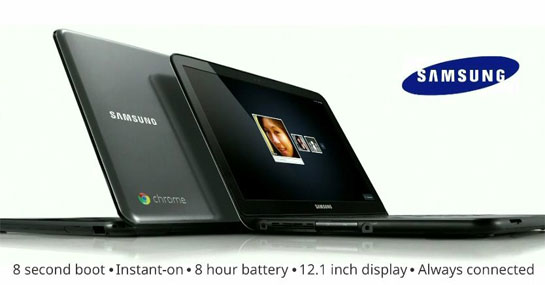
A year and three-quarters ago, Google announced that it was working on Chrome OS, an operating system that was just a browser (or, if you prefer, a browser that had evolved into an operating system). That was a long, long time ago. In mid-2009, netbooks were trendy. The iPad didn’t exist. Android was merely a phone operating system, and one that was still just getting started at that.
This operating system thing turned out to be tricky: Chrome OS-based computers were supposed to hit the market by the end of 2010, but the schedule slipped, so the only one that met that deadline was Google’s own experimental CR-48. At today’s Google I|O keynote, however, Google laid out the basic info of the first two “Chromebooks” (a term I’ve been using for awhile and which Google is now championing) that will go on sale.
6 comments
HP’s New ProBook: Serious Sound and Pay-as-You-Go Broadband
 PC manufacturers like to draw sharp lines between their machines aimed at consumers and the ones built for business. In the real world, things aren’t that simple. I know consumers who like to buy business computers, since they’re often built at least a bit sturdier, aim for reliability rather than bleeding edge-components, feature industrial design that avoids the trendy, and typically come with better warranties. And I also know worker bees who like to get their hands on cool stuff fast and therefore buy consumer systems.
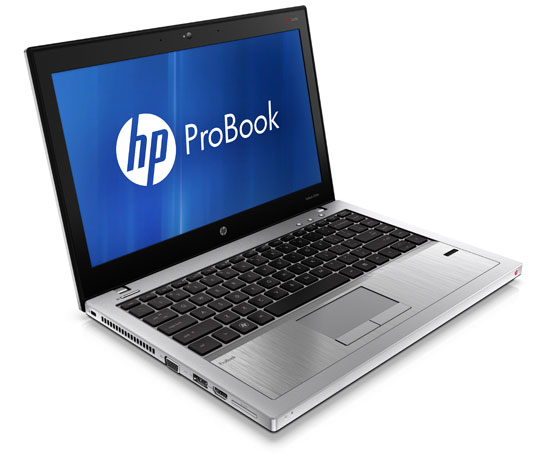
Lately, computer makers seem to be acknowledging that the line between consumery and businessy design is increasingly blurry. HP’s new ProBook 5330m notebook is a case in point: it’s HP’s first business notebook to come with Beats audio, the sound system endorsed by Dr. Dre. The 5330m also features HP’s “Forge” brushed-aluminum industrial design, whose basically philosphy is “Let’s try to make a business notebook that has a bit of style to it, without getting so splashy that it’ll turn off conservative buyers at big companies.” And it’s got a 13.3″ display and no optical drive, a form factor that was pretty darn scarce among corporate machines until recently.
5 comments
Internet (Not) Everywhere

Photo by Flickr user Secretlondon.
I know it’s possible to live without access to the Internet. (Hey, I lived the first fifteen years or so of my life before I heard the dulcet tone of a dial-up modem connection for the first time.) But a funny thing has happened as broadband, cellular networks, and Wi-Fi have put the Internet within my reach the vast majority of the time: I’ve gotten really bad at doing without the Net.
Case in point: Earlier this month, I flew from San Francisco to Alicante, Spain, for an event called the IFA Global Press Conference. The trek involved three plane flights and took close to 24 hours. And aside from a couple layovers, during which I fiddled my iPhone and futzed with iffy airport Wi-Fi, I was disconnected the whole time.
Continue Reading →
4 comments
Chrome OS Notebooks: By Subscription?
 Neowin reports an intriguing rumor: When the first batch of Google’s Chrome OS notebooks launch in June or July, customers will be able to lease them for $10 to $20 per month.
The Chrome OS subscription, as Neowin calls it, would entitle the user to free hardware upgrades, as well as replacement units if anything goes wrong. Full-priced laptops would also be available, and the Chrome OS notebooks would reportedly be distributed “in a fashion similar to the way Android is distributed,” which I assume means through wireless carriers and retail stores.
Neowin’s report is based on a single, unnamed source, and it’s wacky enough to consider with an ounce of skepticism. But it’s also rather plausible.
7 comments
New Toshibas: A More Powerful Portégé, Sleeker Full-Sized Laptops, and a Monitor to Go

Toshiba's Portégé R830
When people ask me for recommendations about highly portable Windows notebooks, I’m quick to mention Toshiba’s Portégé R700–a reasonably-priced three-pounder that has a 13.3″ screen and even manages to pack a DVD burner into its trim, good-looking case. Today, Toshiba is announcing the R700’s successor–as well as two larger notebooks and a unique portable display. The company recently gave me a preview of its new wares.
No comments
Netbooks: Not Exciting
MocoNews’s Tom Krazit says that recent developments at Acer and Google indicate that netbooks are down and out.
4 comments
The Cost of Chrome OS: How About $250 or Less?
 When I wrote about Google’s experimental CR-48 Chrome OS notebook last December, I guessed that it might cost about $449 if it were a commercial product. That seemed high for a device that was entirely dedicated to accessing the Web (and nearly useless when you couldn’t get online). And a bunch of people told me my guestimate was too high.
Months later, nobody has announced any detail on the Chrome OS machines which will supposedly be shipping in just a few months. But there are rumors–courtesy of rumor kingpin Digitimes–that Asus has plans to release a netbook for $200-$250 in June. One that might conceivably run Chrome OS. (I say “might conceivably” because Digitimes’ sources say that Asus “should” use either Chrome OS or Android on the machine–which is a whole lot vaguer than saying that Asus will use either one of those operating systems.)
Could Asus sell a decent Chrome OS laptop with an 12.1″ screen and built-in wireless broadband for $250 or less? That sounds aggressive to me. But if they can manage it, the deal sounds a whole lot more appealing than the $449 Chromebook I envisioned. And if they can sell a clamshell device at that pricetag, couldn’t they whack off the keyboard, add an on-screen one, and have a plausible low-end tablet?